Danelectro Danecho Buffer Mod

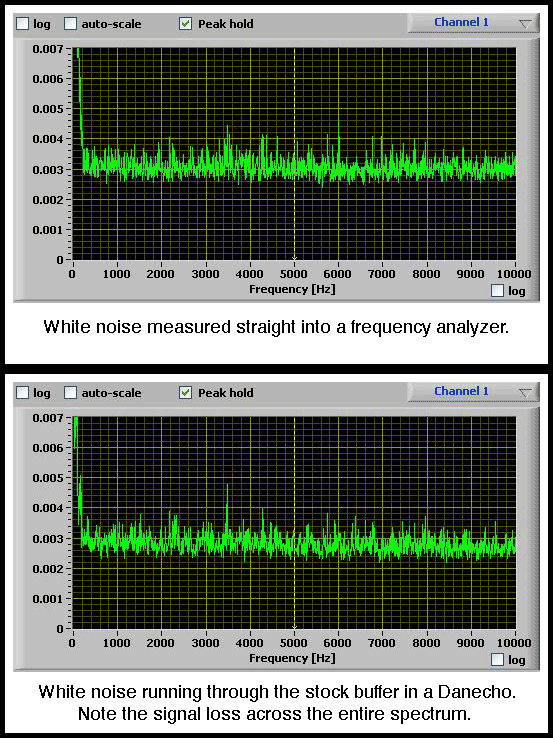
This post is for you serious pedal geeks. A common mod for the Danecho is to use a better input buffer to prevent signal loading and retain the clarity. In an attempt to show visually what is actually happening I ran a white noise generator into a frequency analyzer. The image below shows the graphs of first what the white noise looks like, and second what it looks like when run through the Danecho while in bypass. You must click on the image below for it to enlarge then it cycles between two images every 5 seconds so be patient. You’ll notice a large drop off across the entire spectrum and the treble region (right side of the graph) is exceptionally weak with the Danecho in the signal path. Simply plugging the pedal into your signal chain with decrease your signal strength and clarity. The modification as well as other mods are offered on the “Modifications” page at fxdoctor.com.
Posted in Favorites, Modifications | Tagged | Leave a comment

Manual Flanger

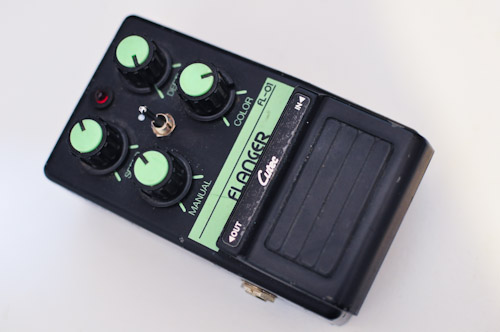
Here’s an old Cutec flanger which was modified to add a bypass switch for the LFO. This means instead of the swooshing sound the toggle switch allows you to stop the sweep wherever you’d like. It gives all sorts of filtered and metallic tones. The Depth, Manual, and Color switch function in both modes while the Speed control only works in the stock mode. This modification is available for all effects with a rate control (chorus, phaser, flanger, etc.).

Posted in Modifications | Tagged | Leave a comment

Mini-Monster Face Organ

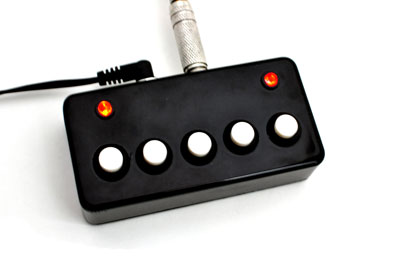
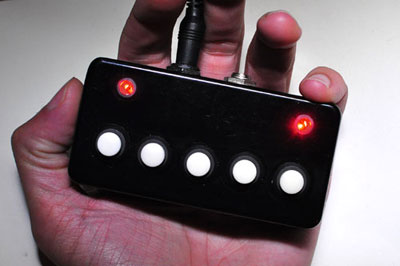
This is a hand held noise maker which is a smaller version of the Monster Face Organ posted a few months back. Same sound but with only 5 user selectable frequencies. Limited runs will be available at $80 each.

Posted in Custom Shop, Favorites | Tagged | Leave a comment

Metatron Sample-Hold Filter

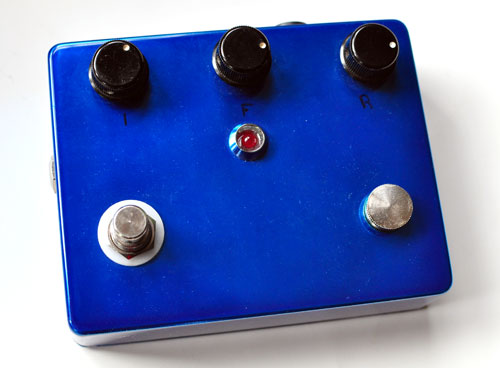
So if you saw the previous entry you may be wondering what the pedal looks like and get some more details on it. The one pictured above is the first completed prototype that will be for sale. The final controls (as of now) are Intensity (amplitude), Range, and Rate. A few advantages over some vintage Sample-Hold Filters:
1. Low noise and updated ICs.
2. Runs on a single 9V source thanks to a voltage inverting circuit.
3. True bypass.
4. The LFO is muted in bypass to prevent any ticking bleeding through when off.
5. The addition of a Range and Intensity control.

The prototype above can only be powered by a 9V adapter. The silver circuit on the right is just a hole plug.

Posted in Custom Shop, Favorites | Tagged | Leave a comment

Dan Armstrong Purple Peaker Rehousing

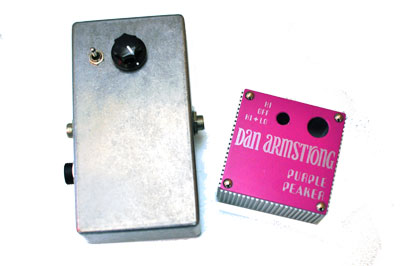
These devices are certainly unique but the fact that they mount directly to your instrument isn’t acceptable for many guitarists. Here is a rehousing with the addition of a DC jack and a volume control. The layout allows room for a bypass footswitch to be added in the future if needed.

Posted in Custom Shop, Rehousings | Tagged | Leave a comment

Fuzz prototype update

In an effort to improve the 8-Bit fuzz (and possibly make it Bass guitar friendly) I started working on this prototype. The knobs are as follow: thickness selector, gain, input bias, – cut, + cut, feedback recovery, volume, and a focus switch. Expect to see add-on options for the 8-Bit Fuzz in the future. Controls to adjust the amount of glitch (sonic stability control) and to increase the sustain should be available soon.

Posted in Custom Shop, Favorites, Prototype | Tagged | 3 Comments

Napkin rehousing project

After speaking with a client he requested that his tone generator be rehoused from its cigar box into a steel napkin dispenser. The difficult part was fitting everything into a smaller face while clearing the internal springs of the napkin dispenser. This is what I received to work with:

A quick scan and some measurements of the internals gave me a layout that would be acceptable. This involved quite a bit of measuring to keep the components clear from any moving parts.

Once the drilling was completed it was a matter of lengthening wires to make it all fit and populating the casing.

And there we have it, a completed rehousing.

Posted in Favorites, Rehousings | Tagged | Leave a comment

Monster Face Organ video

Finally an update of a device posted a few weeks back.

Posted in Custom Shop | Tagged | Leave a comment

Confused about True Bypass and why you may want it?

Confused about True Bypass and why you may want it? Here’s some information:

Mechanical bypass is a method of physically switching the signal. Above is a diagram showing a common method of bypass switching found in older Electro Harmonix pedals, wahs, and various other pedals. The signal is always connected to the input of the effect’s circuitry which loads down the signal. This can cause added noise, decreased volume, and a loss of brightness. The diagram above disproves the common misnomer that only true bypass pedals will pass a signal when the battery power is disconnected. This circuit will pass the uneffected signal even if a battery is not installed.


True bypass switches both the input and output of the effect’s circuitry. The signal should go from the input jack, to the switch, to the output jack without any other components in the signal path. This is the purest form of bypass and is essentially has the same impact on your tone as running a small patch cable. The effect’s circuitry is completely isolated from your signal path when bypassed.


Electronic bypass comes in a few forms but using transistors such as FETs is the most commonly used method. This is popular with Boss, DOD, Ibanez, Danelectro, Digitech, and many other manufacturers. The signal is always flowing through some form of active circuitry (referred to as a buffer) and uses transistors to switch the effect in and out of the signal path. If you remove the battery power the signal will not pass through the pedal.

Check out the True Bypass link on FXdoctor Website if interested in having this work performed on your pedals.

Posted in Favorites, Gear Related | Tagged | Leave a comment

Roll Cage

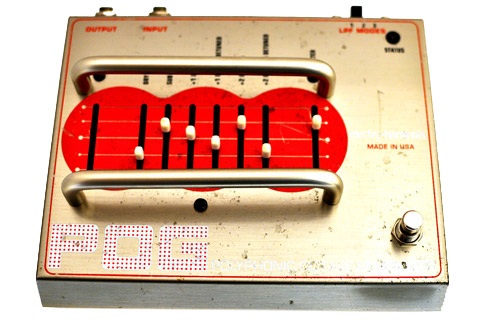
Fragile, unprotected sliders inches from a footswitch is a recipe disaster; especially on a dark stage. A simple roll cage setup allows access to the sliders while protecting from falling mics, inaccurate feet, and wandering pedals.

Posted in Modifications | Tagged | Leave a comment