
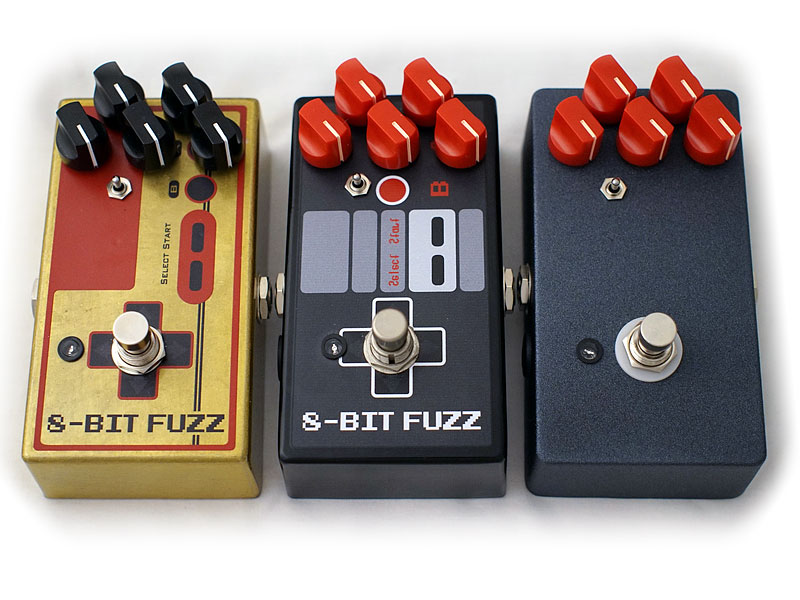
We’re a custom shop and have an in-house fuzz so naturally we’re going to have a lot of different versions over the years. The 8-Bit Fuzz started around 2002 as a glitch fuzz inspired by the chip tune music coming out at the time. For the past 25 years we’ve been making a version based on the original circuit. If you need help dating your pedal this should provide a time frame. We offer services to restore and update any of the older versions to bring them in line with some of the features found on later models.
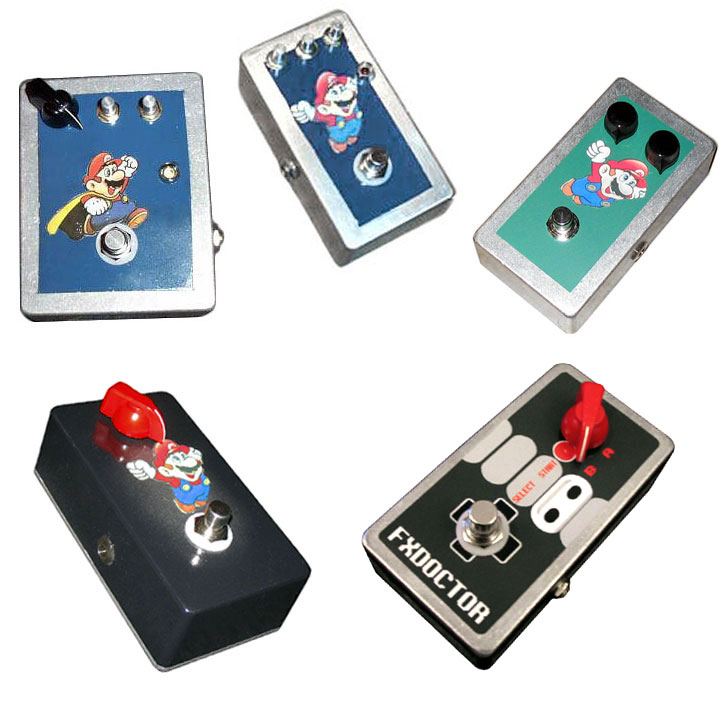
2002-2005: The first 8-Bit Fuzz (Top Left) started out as a 3 knob version with a caped Mario cut out from the instruction manual for Nintendo’s Super Mario World. Shortly after, depleted of Marios to cut out, we started using a printed version of capeless Mario in a smaller enclosure. I remember at the time the 3PDT foot switches on the market were expensive and unreliable resulting in us removing the LED. We briefly offered a 2 knob version and landed on the simplified one Volume knob version with the signature red knob (Bottom Left). In about 2004 we moved away from putting Mario on the pedal for obvious copyright infringement concerns.
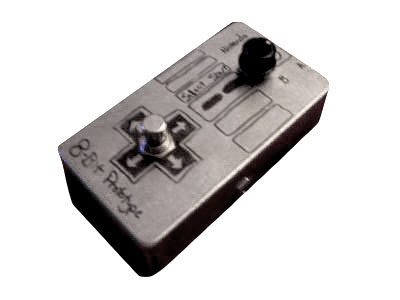
This 2004 prototype was hand drawn and shipped around as a mail-order demo unit.
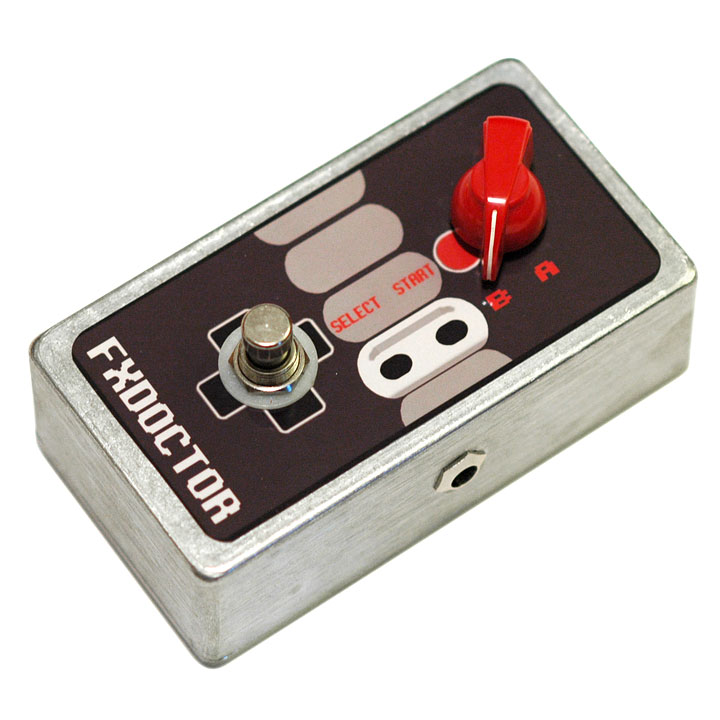
This is what became the standard 8-Bit fuzz in 2004. We started using a printed label for the top and I believe were selling for around $70 at the time.
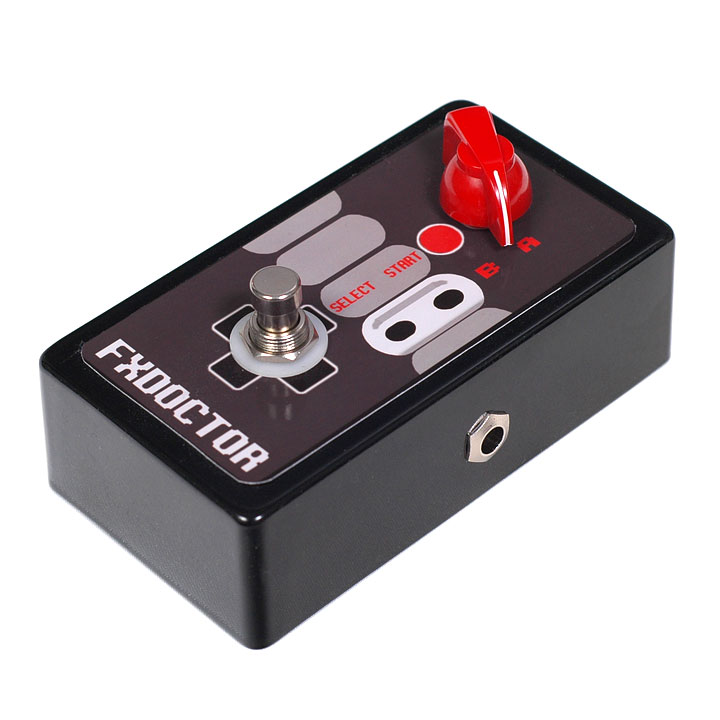
A few years later we found a good supplier for painted enclosures and started offering these in 2007.
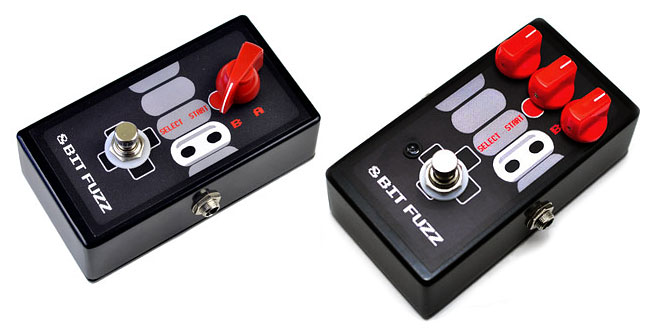
Around 2008 we switched over to using stickers instead of gluing on labels. These were much more durable. If you remember earlier, we removed the LED due to issues with 3PDT switches on the market but we brought it back and also added back in the Gain and Stability knobs. This was a transitional period while we were trying to balance price and performance. Eventually the single knob version was phased out and the 3-knob became the standard model.
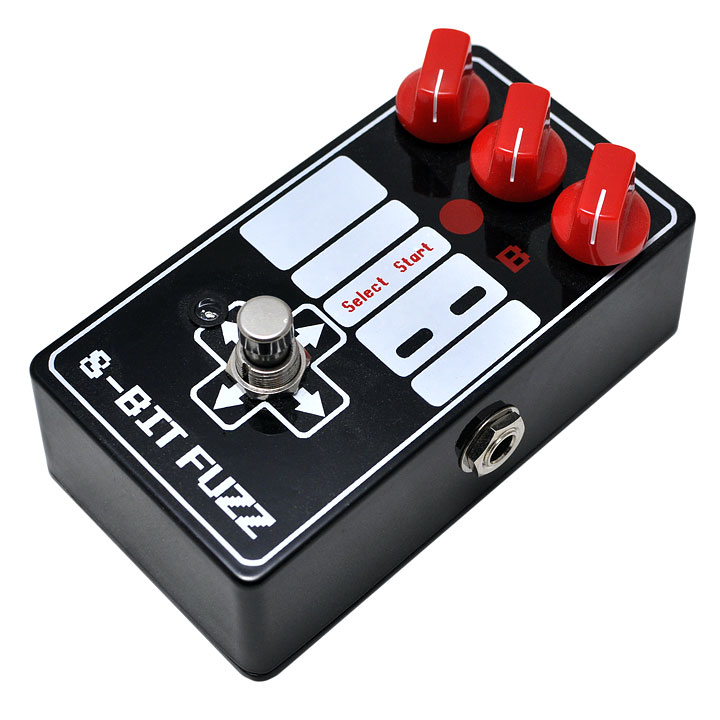
Our first serious attempt at launching this as a retail product was 2011 where we had the absolutely most cursed experience getting good looking enclosures from a now defunct supplier. The samples looked great but the product that shipped to us was almost entirely unusable. This gloss black and two color silk screened enclosure was one of the few that actually were assembled and sold.
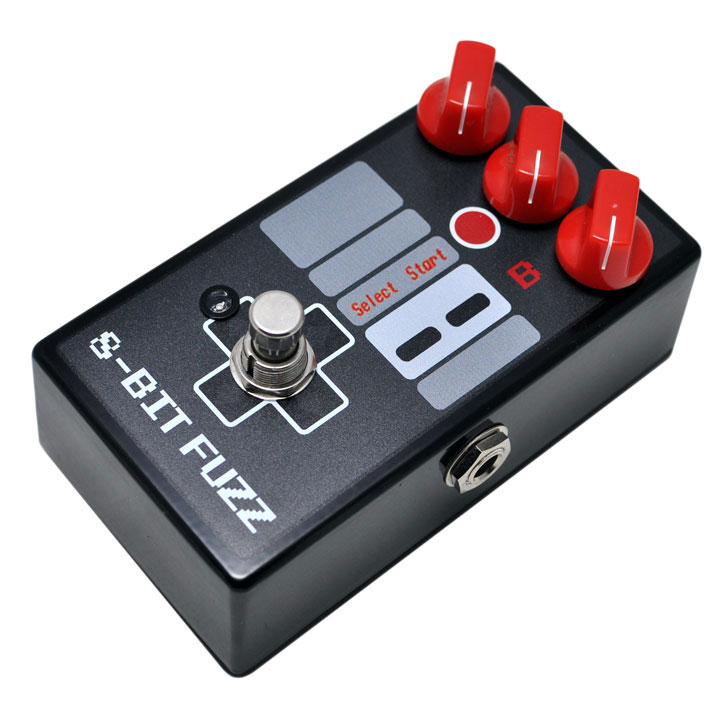
This is our second attempt at a retail launch around 2013 using a different vendor that could do full-color UV printing straight onto the enclosure. The product looks significantly better and was our standard look for years.
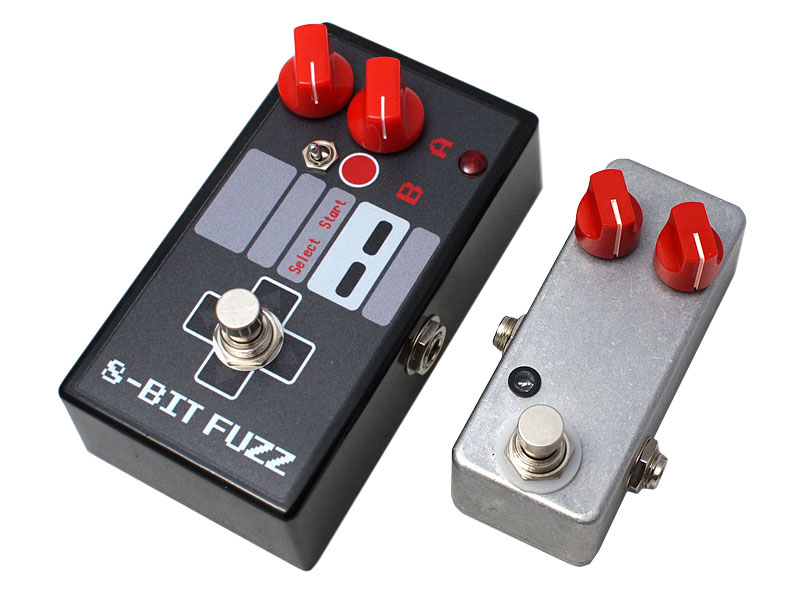
For those not familiar with the pedal, the Gain and Stability knobs are designed to balance each other out. If you turn both all of the way up, the pedal self-oscillates. This is fine for online orders where we can show the expected behavior in a video and provide a user manual, but for a retail setting people were walking away confused as to how to use the pedal. Above is our attempt to make a “retail friendly” version that combines the Gain and Stability knobs in a way the prevents self-oscillation. Also a mini version for fun.

Now in 2015 we started offering the “Super 8-Bit” fuzz which has an added Cut knob, Focus knob, and a 3-way Mode toggle switch. This was offered alongside the standard model for a while but eventually we cut the lower tier 2 and 3 knob versions. This is the final version of the pedal; We love the evolution over the 13 years since the first one was assembled and consider this the best one we’ve built.
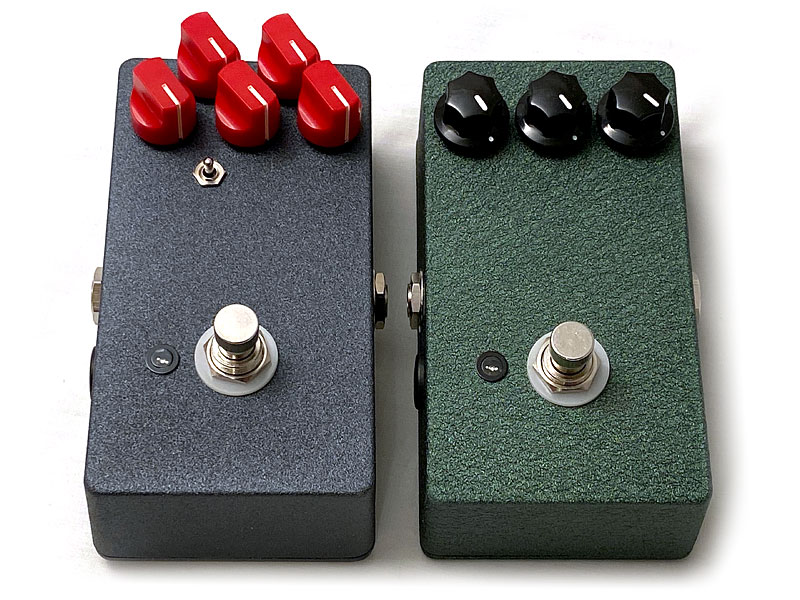
Suppliers can be finicky and stocking inventory can be complicated. We eventually moved to an unlabeled enclosure to keep the retail price down and free us from vendor constraints. This especially became an issue in 2020 when there were massive supply chain constraints. In addition to the lower cost, the textured silver powder coat is very durable.
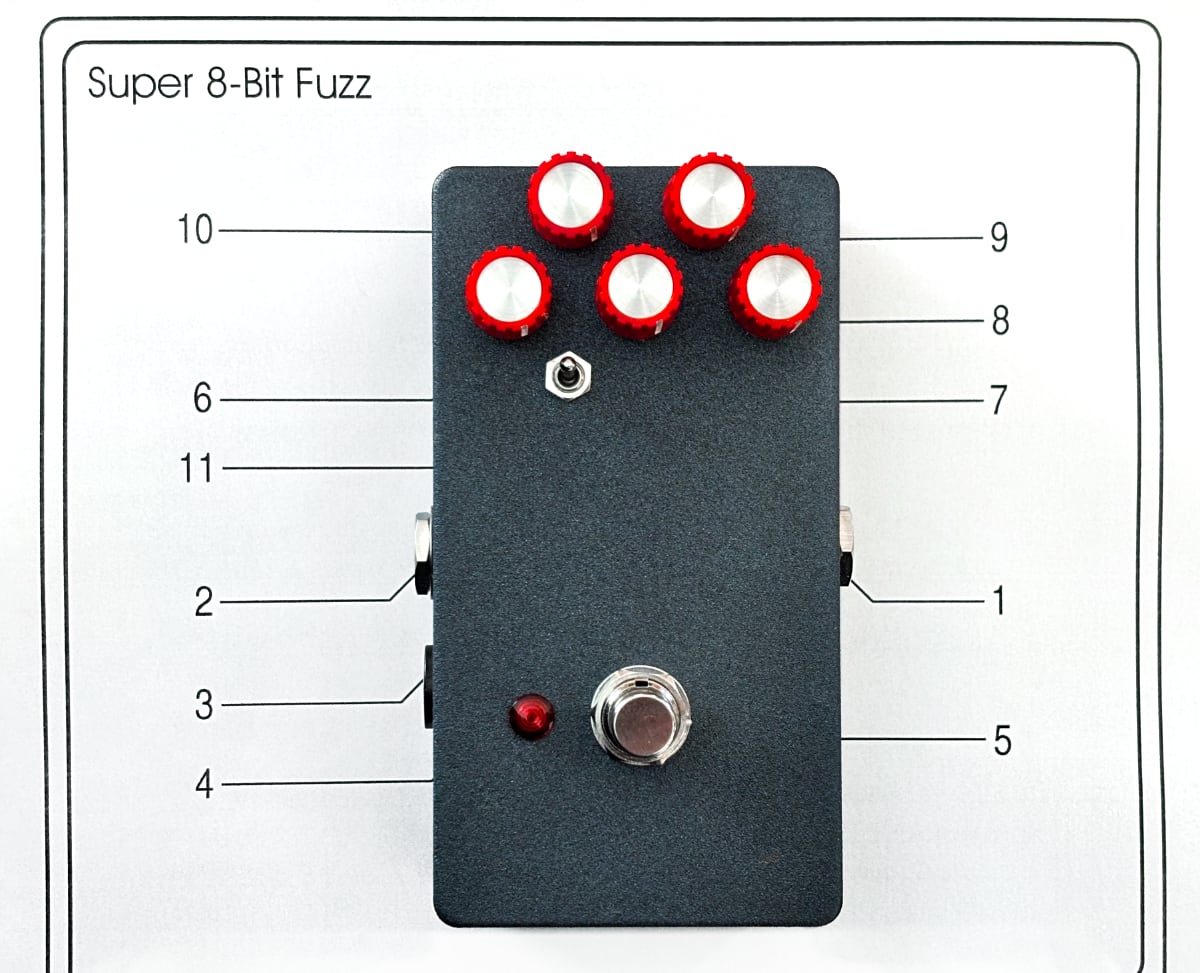
And this is the final version. We’ve switched to a red LED diffuser and put on some different knobs to make them easier to turn but otherwise the circuit has remained the same.
Below are some of the prototypes and limited editions we’ve offered over the years:
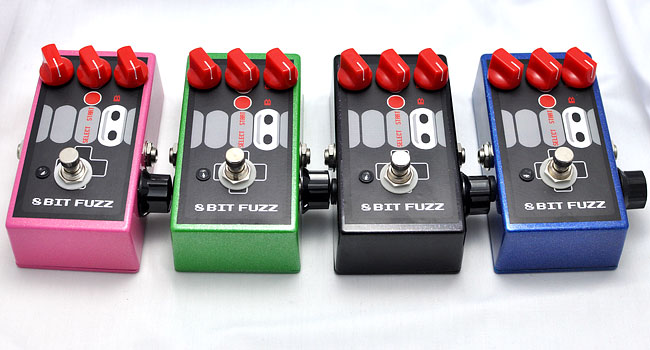
Here we have a run of 8-Bits with a volume cut knob on the right side. This was the inspiration to add it to the “Super 8-Bit” version which we later released. The height is just right where you can get a rubber cap from Dunlop/MXR and (gently) roll it up and down with your foot.
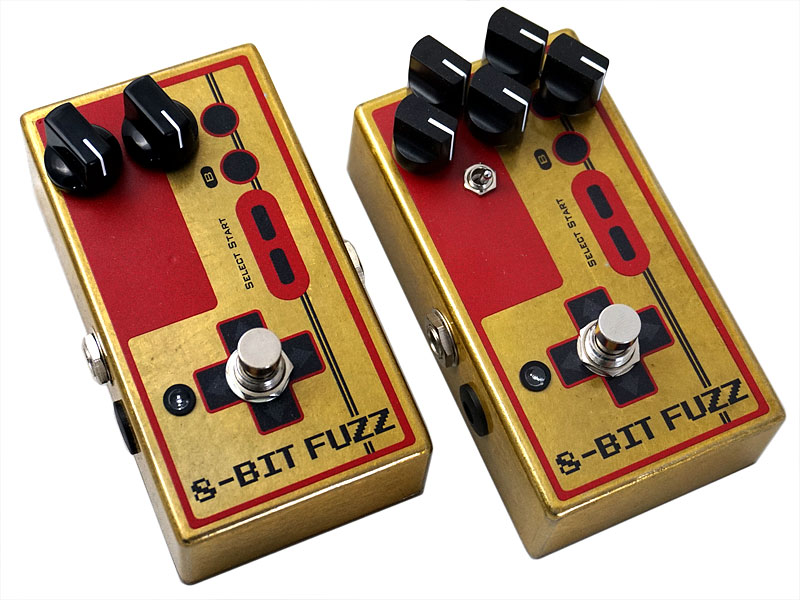
Here’s our 2015 limited edition Famicom version for the Japanese market. The gold finish is beautiful but can be problematic as it shows the blemishes of the aluminum casting underneath.
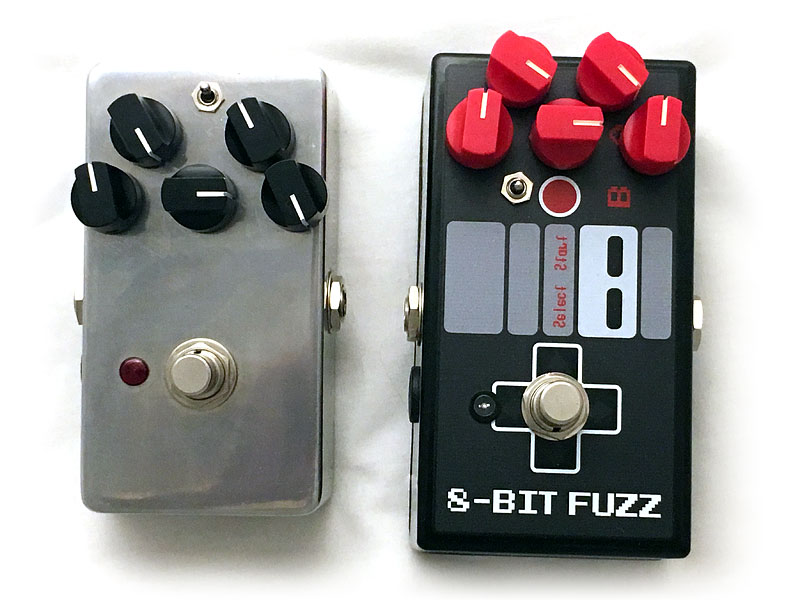
A prototype of when we were attempting to shrink the enclosure down from a 125-B to 1590b. Certainly possible but would require reworking the PCB and changing the knobs.
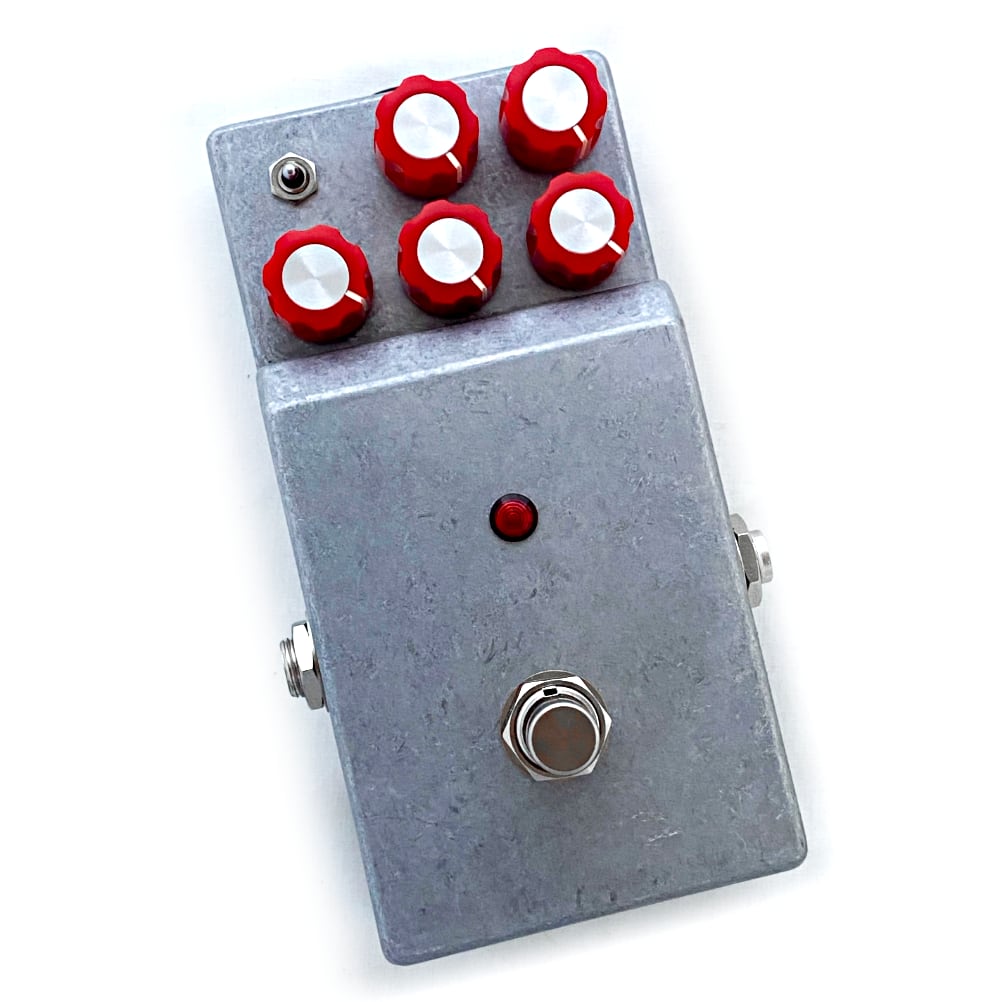
Another experiment at trying a different enclosure and knob layout. This 2023 prototype uses the Small Bear Bare Box which had some really nice features like a lower area to protect the knobs and access to the battery compartment with no tools required.